Core judgment
If the model determines whether an agent feels human, the harness determines what kind of person it becomes.
When people talk about AI products, attention usually lands on the model: how large the parameter count is, how high the leaderboard scores are, how strong the reasoning is.
But as model capabilities gradually converge and costs keep falling, what increasingly separates products is no longer the model itself. It is the harness wrapped around the model—how it plans tasks, organizes tools, keeps context, validates results, and presents the entire working process to the user.
InfiniSynapse’s most distinctive product character is shaped by this harness: it does not behave like a chatbot that only answers questions. It behaves more like a real data analyst.
The First Trait: Layered Reasoning
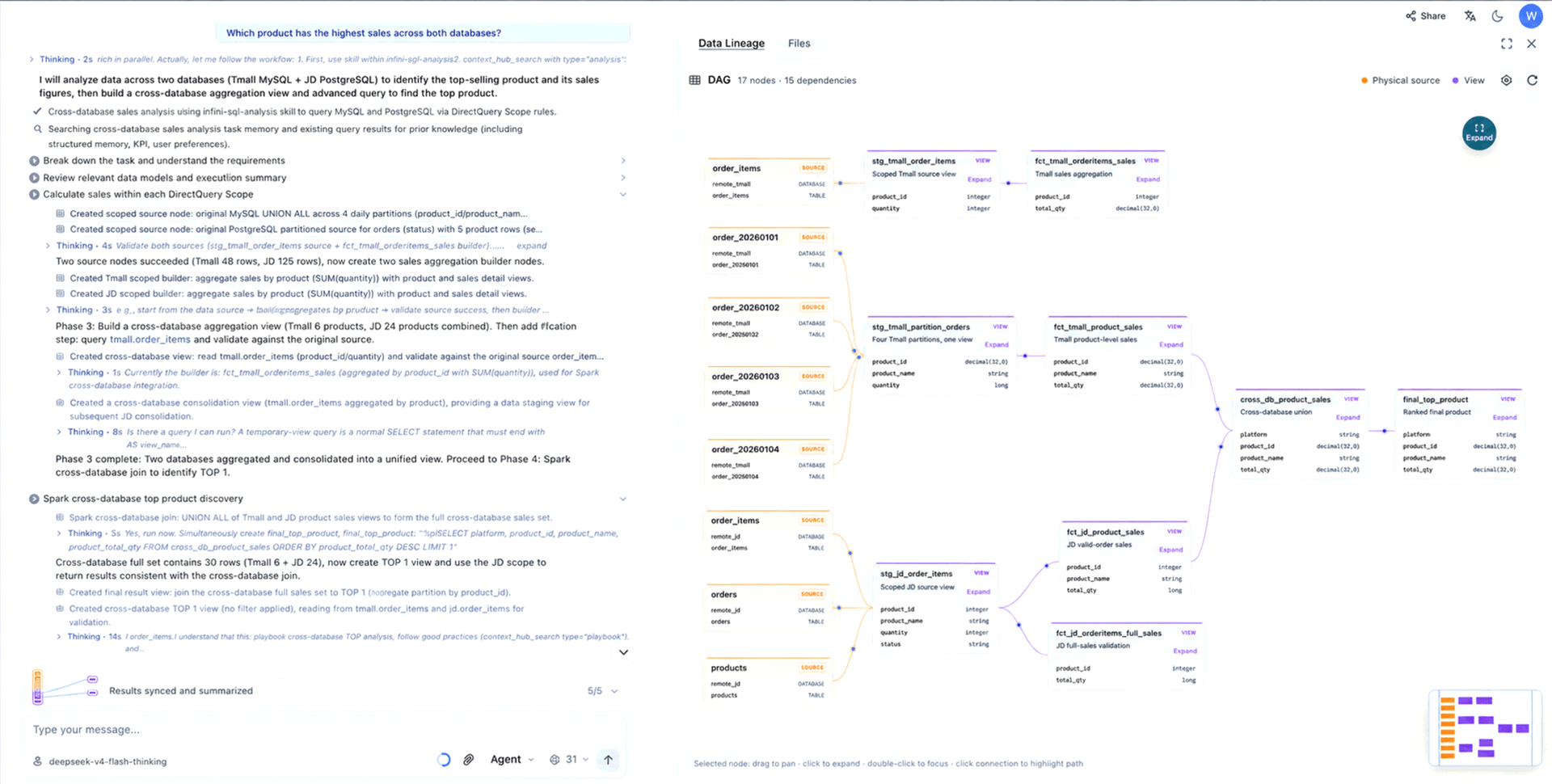
Figure 1: The thinking process is split into an analysis outline and a detailed, traceable workflow.
The first image makes this difference clearest.
InfiniSynapse does not dump every detail at once. It first quickly gives an analysis outline, so the user can see how it intends to understand the problem; then it turns each step into a detailed, traceable workflow, so people can see what it is doing, why it is doing that, and where it plans to go next.
This layered structure usually has three levels:
- First it sets the analysis direction, mapping the business question onto a data task;
- Then it breaks that direction into concrete steps such as locating data, filtering, joining, computing, and validating;
- Finally it makes every step inspectable, adjustable, and reusable, instead of leaving behind only an unexplainable answer.
Code Agents rarely expose this hierarchy in full. Code tasks can usually be verified quickly through tests, compilation, or runtime results. A Data Agent faces business questions, and the analysis path itself has to be understandable to business people. That is why the analysis structure must be more transparent and explainable.
The Second Trait: State the Metric Definition Before the Answer
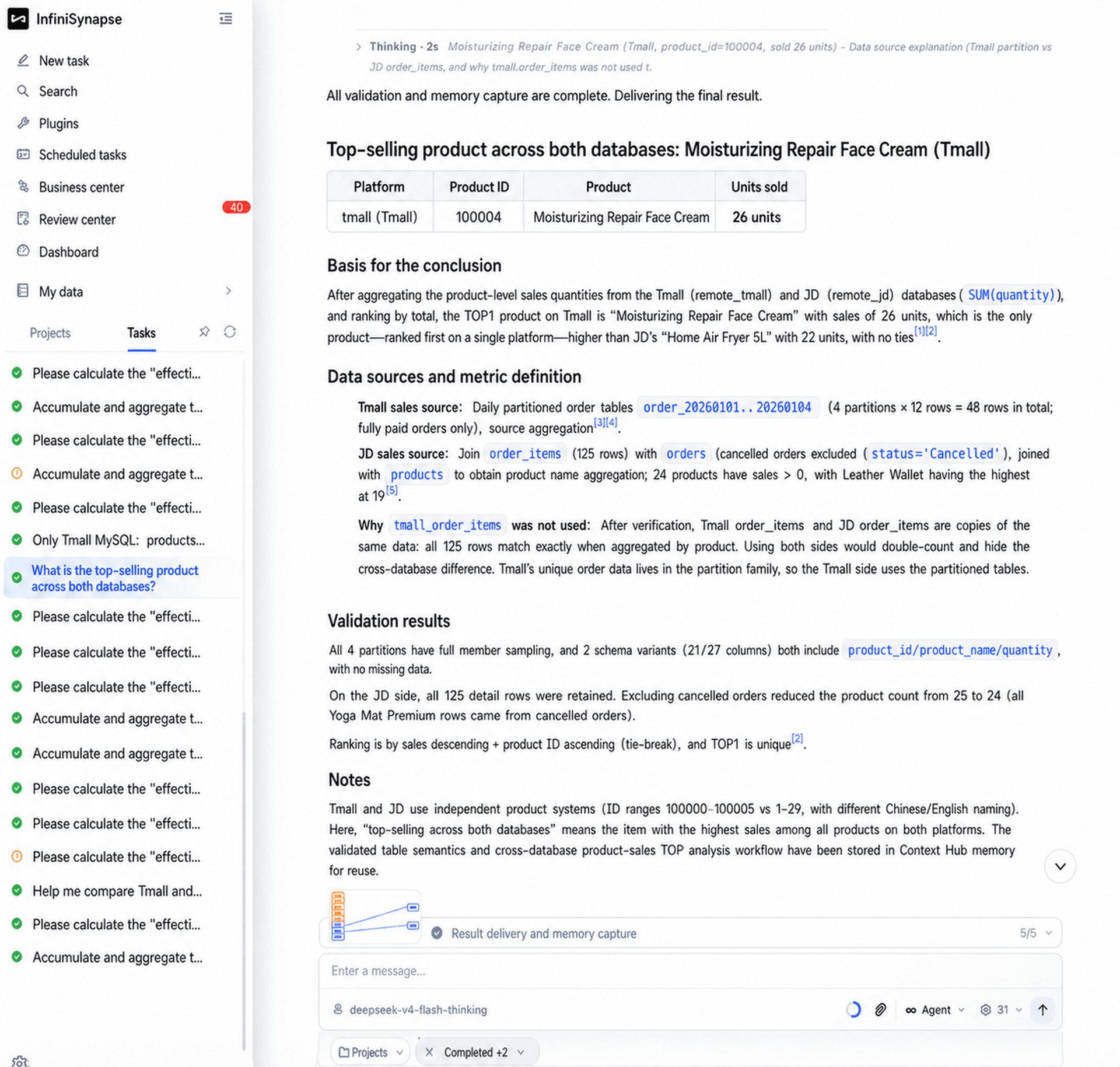
Figure 2: Beyond the answer, the system also makes the data sources, filters, ranking method, and tie-breaking rules explicit.
The second image reveals another hallmark of a real data analyst.
InfiniSynapse does not only tell you the answer. It keeps stating the metric definition: which data sources it used, why it chose this table, which records it filtered, why it did not use another table, what the ranking rule was, and how ties were handled.
This can look verbose. In practice it is extremely important.
Many real-world data disputes are not, at root, calculation errors. They happen when different people use different metric definitions and then compare the results as if they were the same number.
For an enterprise, a number without a metric definition—even if the calculation is correct—is hard to put directly into a decision process. The business side cannot tell whether the number is consistent with existing reports, operating rules, and compliance requirements.
When you use InfiniSynapse, its strong data-analyst character is unmistakable: it does not only give results; it also takes the initiative to explain how those results were computed.
Why This Shift Suddenly Accelerated in 2026
Since June 2026, we have clearly felt the AI world changing faster.
27B-class models can already outperform many older 70B-class models. If you set aside the entry threshold, DeepSeek Flash before its price increase was cheap enough to be almost negligible. As training experience accumulates, developers have more and more knobs they can turn, and model quality keeps improving.
At the same time, since Windsurf fired the opening shot for the agentic paradigm in October 2025, the harness world has also changed dramatically: planning, tool calling, context management, long-running task execution, and result validation are all evolving quickly.
For ordinary companies, this means two conditions that used to be hard to satisfy at the same time are appearing together for the first time:
- Intelligence keeps rising;
- Usage cost keeps falling.
Enterprises are beginning to gain access to models that are both affordable and capable. That was once one of the biggest challenges in deploying InfiniSynapse; now the constraint is finally easing.
Why a Data Agent Sits Closer to “Money”
Compared with a Code Agent, a Data Agent sits closer to the enterprise, closer to the business—and closer to “money.”
Because it does not handle abstract technical problems. It handles real operating problems: which customers to reach, how to identify high-value groups, how to reduce wasted spend, which metrics actually affect revenue, and whether a strategy can be executed inside compliance boundaries.
InfiniSynapse recently had a case: based on historical user behavior analysis, it quickly found the audience the operations team actually wanted to reach.
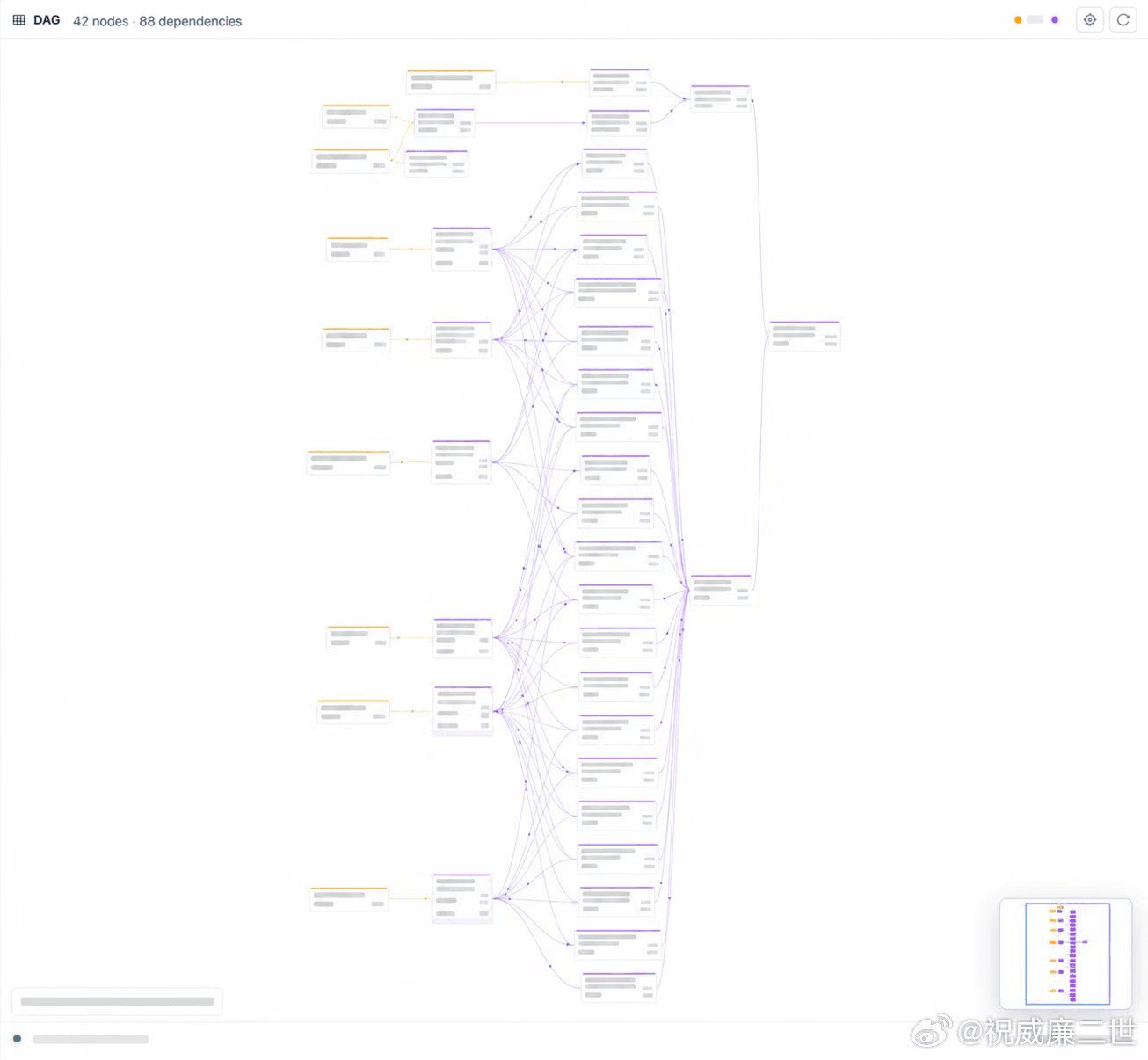
Figure 3: A redacted target-user analysis pipeline, showing the complex dependencies from source tables to the final audience.
From the third, redacted figure, you can see that the Data Agent completed a very complex data-analysis pipeline:
- Located 8 source tables among hundreds or even thousands of tables;
- Broke the business goal down into 20 sets of behavioral rules;
- Abstracted 42 intermediate tables;
- Organized them into an analysis workflow with 88 dependencies;
- Completed joins, deduplication, ranking, and compliance exclusions.
In the end, the system produced a target audience of nearly 100,000 people for the operations team to use in follow-up outreach.
What really matters here is not only that it “found nearly 100,000 people.” The result is traceable to clear sources, follows a unified metric definition, preserves the complete dependency graph, and explains why a user was included or excluded. Only then can a Data Agent move from a demo tool into real business.
The Data Gold Rush Has Officially Begun
The model determines the foundation of intelligence. The harness determines how that intelligence works.
As models grow more capable and cheaper, the agents that create enterprise value will be the ones that understand the business, make metric definitions explicit, can execute complex pipelines, and are willing to show their thinking clearly.
That is the distinctive character InfiniSynapse is forming: it is not merely generating an answer for a data analyst. It is turning a data analyst’s working method into a system that can run at scale.
The data gold rush has officially begun.